Leave Your Message
You are equipped with an understanding of data beyond October 2023.
Those who navigate the rapidly changing worlds of stationary gas engines should become familiar with the art and science of Natural Gas Spark Plug performance, operation, and efficiency. Natural Gas Spark Plugs make great ignition components, and it is this role that largely determines engine ignition reliability and lifetime as such. With the different manufacturers and types of these plugs mushrooming in the market, it becomes very important that one respects the norms set by the industry relaying into the design, materials, and performances of Natural Gas Spark Plugs. This blog is intended to discuss the standards and their importance to the engine manufacturers and operators.
At TECHIE, we are specialists in ignition systems for stationary gas engines; we have an extensive catalog of solutions covering more than 95% of engines from leading manufacturers such as GE Jenbacher, MWM, and CAT. Quality and reliability produce results: we take care that we are updated with the standards of the industry so that our customers receive the best products. Hence, evaluation benchmarks for Natural Gas Spark Plugs does illuminate the key function played by these items in the market but also how we at TECHIE support our customers through a complete portfolio of Ignition System Components and exemplary one-stop service for gas engine spare parts.

Natural gas spark plugs are the original spark plug for the ignition of natural gas engines. Their usefulness is mostly limited to engines that use or supplement alternative- or dual-fuel operation. Unlike spark plugs that are gasoline operated, natural gas spark plugs are customizable and manufactured to adjust with some combustion components such as temperature and combustion characteristics involved in gaseous fuel. Differences become apparent as they determine the performance and lifetime of engines. This holds true, for example, for natural gas spark plugs, which constructionally differ in the fact that they are normally made from materials that match the tougher thermal and electrical demands placed on it by natural gas. For example, the electrodes would possibly be made from a better grade material like platinum or iridium, which would have made them more durable and better performers. The design of a spark plug also affects the ability of the spark plug to ignite the fuel. It thus determines the engine performance and emissions. Natural gas spark plugs have some international specifications for safety and reliability. Many of these are associated with different institutes. For instance, American National Standards Institute (ANSI) standards set up a guideline for performance standards and test methods for those plugs. Meeting these standards assures manufacturers and consumers of the quality of a given product but most importantly safeguards environmental sustainability through minimizing emissions from natural gas engines. These specifications would be vital for anyone involved in the manufacture, installation, or maintenance of natural gas engines.
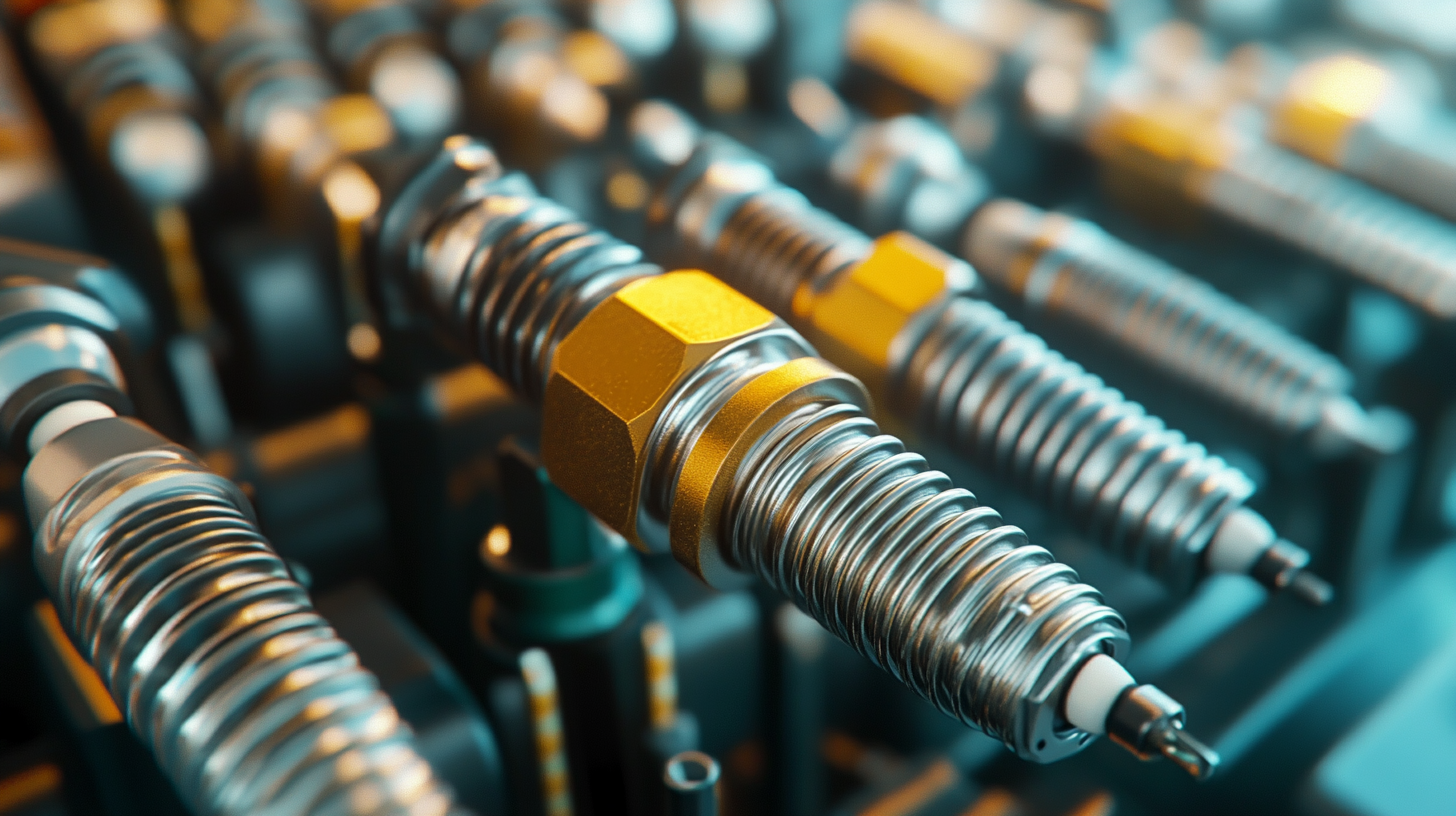
Every natural gas engine has natural gas spark plugs among its important components. Therefore, the knowledge of the industry standards concerning them becomes important for manufacturers and users alike. The industry standards developed play a vital role in assuring the performance, safety, and environmental compliance of these components. An important one is the ISO 15500 series of standards specifying natural gas engine components, including spark plugs. These standards regulate dimensions, materials requirements, and testing methods so that spark plugs endure the special conditions of natural gas combustion.
According to a latest IGU report, some 25% of the electricity generated worldwide by natural gas, emphasizing the important role of reliable spark plugs in systems' efficiency. These standardizations of spark plugs are important not only for performance but mainly for emissions control; namely, compliant spark plugs help in reducing emissions, thus abiding by the likes of EPA regulations. Besides that, ASTM standards, and mainly ASTM D7099 also provide requirements for natural gaseous-fuelled engine assessment so that the spark plugs will satisfy operational requirements under various conditions.
Such standards provide their specifications covering various thermal and electrical features along with longevity. The Society of Automotive Engineers (SAE) indicates in its report that spark plugs manufactured according to those standards can last and perform well for over 200,000 miles in natural gas applications, thus proving their endurance and efficiency. By fulfilling these industry standards, manufacturers are able to improve product reliability and adhere to international environmental regulations.

The rudimentary function of natural gas spark plugs is to ensure that the natural gas engine functions efficiently, and this has become increasingly important in varied applications involving industry and automobile. The variety in these products addresses many engine designs and performance specifications. The manufacturer and end user must know the various types of natural gas spark plugs that will help achieve maximum performance and reliability from the engine.
Broadly, natural gas spark plugs may be classified as standard or premium. Standard spark plugs are hence viewed mainly as fit for normal use, guaranteeing maximum reliability in most-natural gas-engined applications. On the other hand, premium spark plugs are designed with special materials that assist in heat dissipation from the center electrode and in very high pressure during the combustion event. Hence, they yield higher durability and ignition efficiency. Proving to be great players in terms of maintaining fuel combustion, premium spark plugs are said to increase the engine efficiency by about 5-10% while drastically decreasing emissions; hence, they fall well under concern with the present environmental sustainability spotlight.
Furthermore, from the recent analysis, it is found the consumption of natural gas within China may cross 4000 billion cubic meters per annum during 2023. Such an enhancement places more emphasis on the demand for technologies applied to the utilization of natural gas, among which lies the development of specialized spark plugs. The products' future market needs will call for manufacturers to invest heavily in R&D to stay ahead of the competition as natural gas consumption climbs in the midst of an international trend towards green energy. The better the choice of natural gas spark plugs, the better the contribution toward maximizing engine performance, energy efficiency, and emissions reduction.

While choosing spark plugs for natural gas, pivotal considerations include performance characteristics, without which the efficiency and lifetime of the plugs will be influenced. Thus, as argued outside this later, the new report of the International Energy Agency (IEA) highlights that durability and performance were influenced mostly by materials used for manufacturing spark plugs. For instance, platinum and iridium spark plugs usually last longer than standard copper plugs, often exceeding 100,000 miles, whereas copper has about 20,000-30,000 miles.
Heat range is another important parameter for spark plug performance. As cited by the Journal of Engine Research, spark plugs that are of optimum heat range help to avoid pre-ignition and misfiring of the engine; which are common problems for natural gas engines. Choosing plugs with a heat range suitable for the operating conditions of the engine guarantees effective combustion and optimum utilization of fuel, which can lead to a significant reduction in the overall fuel cost.
Like gap size, the spark plug differs in its action within ignition performance. It is proved by research that optimal gap improves the flame propagation rate in natural gas engines and consequently facilitates a higher output power. From ASME data, it is witnessed that engines employing proper gap spark plugs can reap up to 10% in efficiency gain, so this aspect forms a critical selection criterion. Understanding these performance parameters is essential for optimizing engine operation and ensuring reliability in a natural gas application.
All best practices should be followed during the installation of natural gas spark plugs to maintain best performance and safety. Most importantly, the right spark plug should be chosen according to the specific model of the natural gas engine. Otherwise, inappropriate spark plugs cause poor combustion, reduced efficiency, and eventual engine damage.
Once the correct spark plugs are found, installation must be performed accurately. In fact, cleaning the installation area is recommended so that no debris may enter the engine. Spark plugs must be tightened according to strict torque specifications. Any deviation from the specified torque under-tightening or over-tightening could lead to problems such as blowouts or cracked insulators. Also, it is vital to ensure that the spark plugs are gapped correctly, as the gap will affect the amount of ignition spark needed to ignite the natural gas properly.
With the skyrocketing prices of industrial gas as seen in various news bulletins, industries must find every avenue of savings by working efficiently. The maintenance and proper installation of natural gas spark plugs foster the overall efficiency of gas engines, providing an alternative solution to controlling operational costs amidst volatile energy prices. Thus, following best practices for spark plug installation will tighten engine performance and economically control operational costs.
For natural gas engines, the spark plugs are a significant component for efficiency. There are certain problems attached with it and sub-optimal performance, one of which would be fouling, which is characterized by deposits forming on the surface of the plug due to fuel contamination, or from an excessive oil consumption. This would lead to misfires, performance degradation, and increased emissions. Inspection of spark plugs visually can be done regularly so that any fouling is detected early enough for cleaning or replacement.
Another problem arising with spark plugs is an improper gap setting. All electrodes of a spark plug are supposed to come together to provide an efficient ignition, and if there be a gap wider than or narrower than required, this leads to either weak ignitions or increased wear. Hence it is advised that feeler gauges are used to check gaps, and adjust to those recommended by the manufacturer. Worn-out electrodes or cracked insulators are just some indications that the time for fitting replacement spark plugs has come. Such improve reliability and performance of the engine.
Overheating can also take place and might mean sparks are ruined in advance. Overheating results from amongst other reasons, incorrect heat ranges or lean fuel mixtures or due to engine timing. Monitoring the operating engine temperature and ensuring the right fuelling mixture will prevent the engine from overheating. All these plus regular maintenance and attention to spark plug systems can give natural gas engines the efficiency and longevity that they very much deserve.
As automotive and industrial sectors include a greater amount of sustainable energy solutions, innovations for natural road gas spark plugs should altogether redefine performance standards in the very near future. Current nondisclosure International Energy Agency reports estimate that natural gas consumption for transportation will increase by over 25% by the year 2030 due to more rigid emissions regulations and cleaner fuels being the focus globally. This transformed scenery gives rise to the need for advancements in spark plug technology with respect to gas engines.
One of the most significant innovations that are quite literally on the drawing board can be defined as high-temperature resistance materials, extending the time and efficiency of natural gas spark plugs. Advanced ceramic materials have shown that when they'll be applied, they will increase thermal stability and thus improve ignition performance under variable operational conditions. The other trend in scoping nowadays is introducing smart sensors into spark plugs to monitor engine performance and fuel efficiency in real-time. According to McKinsey's report, these smart technologies could save up to 15% in fuel, bringing huge profit margins for consumers and businesses.
The tendency now is toward modular design so that maintenance and replacement will be easier. The purpose is to equip these spark plugs with potential R&D for mixing fuels to accommodate the variant applications of natural gas all over vehicles and industrial machinery. The American Gas Association forecasts that such innovations may produce a 30% increase in the adoption of natural gas vehicles by 2025, highlighting a strong market demand for better spark plug technologies. Hence, the future of natural gas spark plugs sees themselves not merely in terms of emissions regulations but innovation driving efficiency and sustainability.
Compliance with regulations and standards for natural gas spark plugs is crucial for manufacturers to produce safe and reliable products. Guided by the International Organization for Standardization (ISO) and the Environmental Protection Agency (EPA), various sets of standards dealing with emission cutdown and cleaner fuel usage have been put in place. MarketsandMarkets provides that due to stricter environmental regulations and the rise in demand for alternative fuels, the global natural gas spark plug market is going to generate larger revenues, reaching USD 1.2 billion by 2025.
When it comes to compliance with regulation that states the design and manufacture of spark plugs, the testing and certification processes must also be incorporated. For example, spark plugs shall conform to ANSI/ISA-12.12.01 in regards to electrical equipment installed in hazardous locations. Such adherence to safety guidelines and operational guidelines is critical for the minimization of risk factors associated with natural gas use. A survey by the Gas Technology Institute has shown that non-compliance constitutes grounds for significant operational failure, thus underscoring manufacturers' need to remain updated on changing legislation.
In addition, firms must not only comply with laid-down standards but must also dedicate resources to the research and development of their products so they can remain competitive in an industry so rapidly changing. Innovation is vital for achieving market share and building consumer trust, always within the framework of regulation. Emergent regulations will shape the natural gas spark plug industry in an ever-increasing manner as the industry itself changes, focusing on sustainability and efficiency.
The two primary types of natural gas spark plugs are standard and premium. Standard spark plugs are designed for everyday use, while premium spark plugs are engineered with advanced materials for enhanced durability and improved ignition efficiency.
Premium spark plugs can lead to a 5-10% increase in engine efficiency and a noticeable reduction in emissions, making them beneficial for both performance and environmental sustainability.
Selecting the correct spark plugs is crucial to ensure proper combustion, maximize engine efficiency, and prevent potential engine damage, as inappropriate spark plugs can lead to poor performance.
It is essential to clean the installation area thoroughly and adhere to proper torque specifications when tightening spark plugs to avoid issues like blowouts or cracked insulators.
Fouling can occur when deposits build up on the plug's surface, causing misfires and increased emissions. Regular visual inspections can help identify fouling early for timely cleaning or replacement.
The gap between the electrodes of a spark plug is critical for efficient ignition. An incorrect gap can lead to weak ignition or increased wear, so it should be checked and adjusted according to the manufacturer's specifications.
Overheating can result from incorrect heat ranges, lean fuel mixtures, or engine timing issues. Monitoring the engine's operating temperature and ensuring the fuel mixture is appropriate can help prevent overheating.
Signs of wear, such as eroded electrodes or cracked insulators, indicate that it’s time for new spark plugs, as replacing them enhances engine reliability and performance.
Properly installed and maintained spark plugs contribute to the overall efficiency of gas engines, offering a cost-effective solution for industries looking to mitigate expenses amid rising energy prices.
Research and development are essential for manufacturers to create innovative spark plug technologies that meet the evolving demands of the market, especially as natural gas usage increases.